 |
| Entrez dans l'appel du vide |
Monday, October 5, 2026

Sunday, May 7, 2023
NeverWish for It to Merely Be a Fantasy
This is a story, not unlike many others, about the purest and truest bond of love...

...Between family members, between childhood friends, between lovers, and even between someone and their beloved pet...
All those that learn and grow together, to give life more meaning.


...They met as innocent little turds, running around, discovering the world together, and unknowingly causing amock, with much glee and great delight!

"Oh, is that how time works?"

"Who cares? ...Hurry up, I gotta show you something!" ;)
"...Isn't it beautiful?"

"Yes, indeed," she concurred... about themselves, about magic, about life ...about everything, really.
...They later found themselves in a neo-Venice...

"Shall we swim?"
"We don't have to... Look!" she pointed to a boat...
 |
| Sign says, "TAKE A BOAT RIDE IF YOU DON'T LIKE WET FEETSIES" "touchy the boat" |
"Oh, let's!"
And before they knew it, the peaceful tour took them to a completely different and mesmerizing place...

"This place is my favorite color!"
"Even the statues know what's up!" she agreed... and they both appreciated the analogy.

...Everything is a miracle that's definitely worth celebrating!

"I wonder what else is around here," she marveled.

"Oh, look what I found!" she beckoned to the other with adoration.
"Oh, yes, let's take a piece of this place with us, and then we will always be connected!" she smiled.

"Oh, look at this!" she exclaimed.






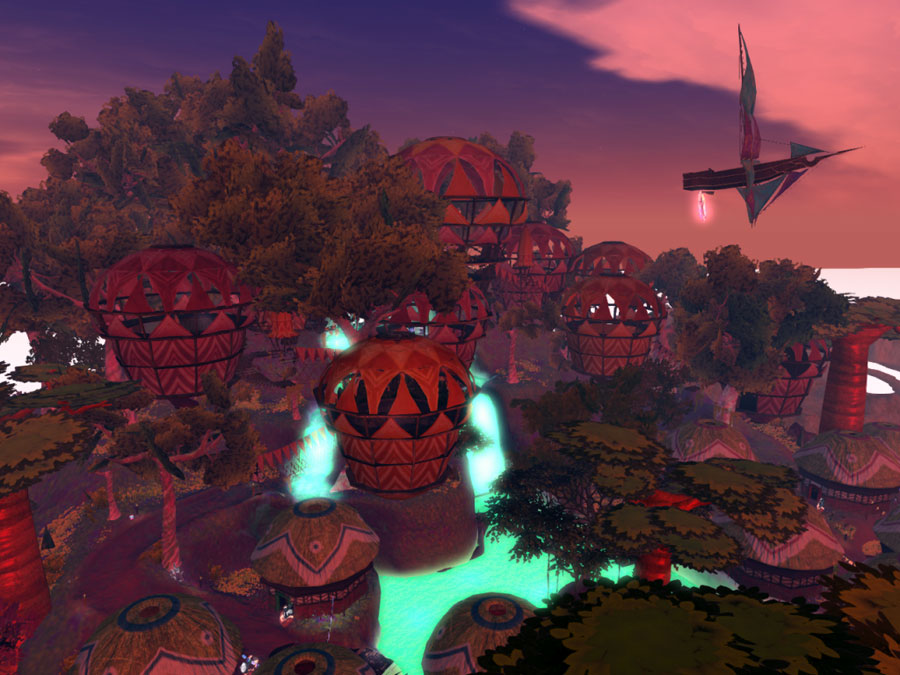
...They toured endless topics, everything under the sun, and beyond.


"Oh, it's beautiful and perfect!" the other squealed with joy!
"Shall we take a closer look at it before we buy it?" she thought out loud, "...Says we can go here to do so..."

"...Oh, it's for a noble and good cause! ...In buying this, we're going to help fund cancer research," she continued.
"What's that, now?" the other was a bit enchanted and bewildered all at once.
"...We'll give hope to all, by helping fight the terrible, invisible monster that wants to deprive everyone of the good that makes everything worthwhile," she solemnly replied.
"That's, oh, so lovely! I know exactly how to do this, follow me!" she giggled with wide, glowing eyes, showing the other that she nabbed the huge package...

...And in clutching the package closely to their hearts and holding hands, they fled to a secret spot in the clouds...
...Where they managed to set up the most exclusive and exquisite safe harbor clubhouse, all for themselves!

...They dreamed of what they had accomplished, before attempting more. :)


"...This is nice, isn't it?" she sighed in contentment.

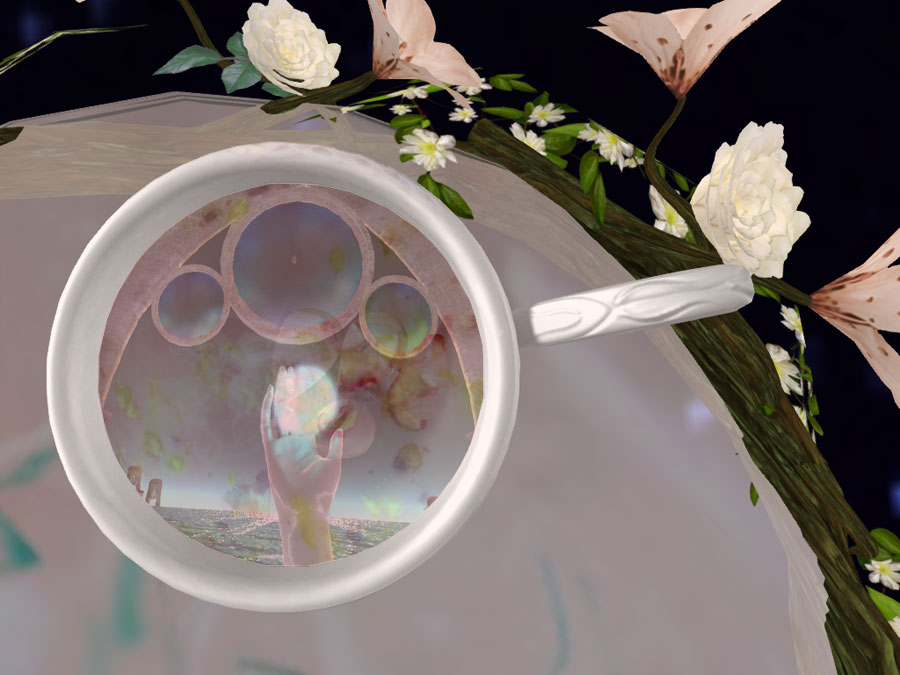
"Very," the other agreed and they literally melted into their teacups...


They felt like they had the whole world in their hands.

...And perhaps they did!

Even tho it was always and inevitably time for bed or other responsibilities...

...They always made time to get together and revel in their fascinations together.
For, their story was a beacon amidst the cold.


"...Hey, when did we get the Thomas Kinkade?"


"Oh, I thought it was a Marty Bell..."

xD
...At any rate, the laws of the universe were no match for the depth of their relationship!

Because they built an oasis of dreams together! ♥

...And ruled it!


"...Listen to me..."

"This is that old Native American story about the 2 battling wolves ... and whatever wolf wins, is the one you feed."

...A majestic storm brewed outside, while it was contemplated for a bit...

...The peaceful warrior with the whole village's helpful prayers...

...Until, one day, she returned to the mysterious beauty from whence she came...

...And a veil between the worlds was temporarily lifted, as the presence of the graceful winged ones appeared, to bridge the gap...

...And she gratefully reiterated what they came to remind her of...
"...We'll always have our castle in the air."
•⊱-*:-.,_,.-:*'´ `*.¸.*´`'*:-.,_,.-:*-⊰
🏰
⊱-*:-.,_,.-:*'´ `*.¸.*´`'*:-.,_,.-:*-⊰•SPECS:

- This Fantasy Faire edition entry was specially done for NeverWish. ...If you're also a blogger, please get in touch with me so we can link to each other, thank you! :) ♥
- Fantasy Faire Poster was taken from the FF webby. Product pictures (in these credits) came directly from NeverWish's media, they're also not mine, please look to Pixie Ruby. :)
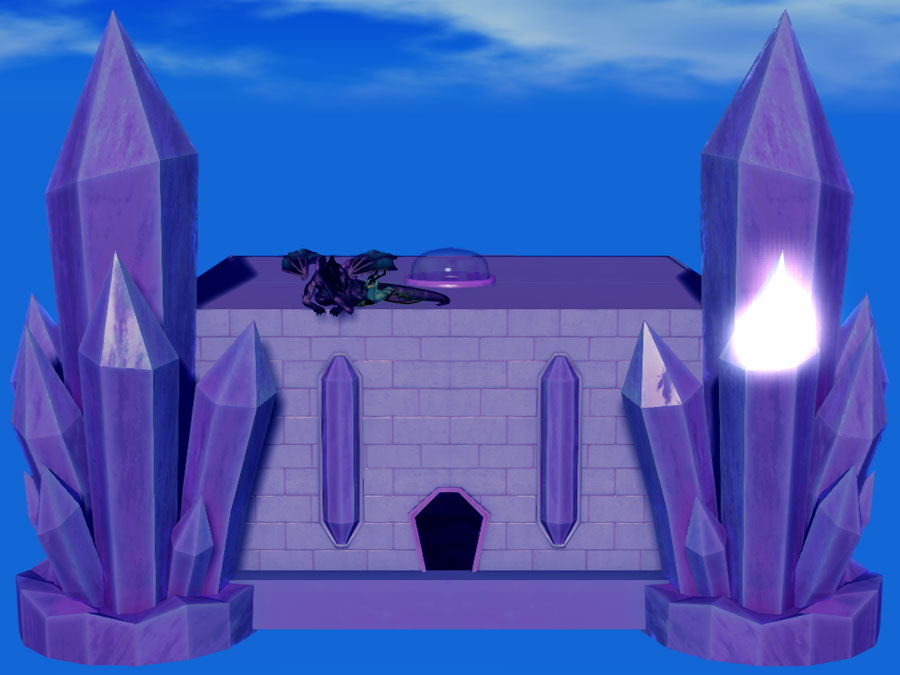
- Picture backgrounds of Fantasy Faire were taken with the Firestorm Viewer and are raw, because, well... fuck chancing lag & yay for showing off photography skills! Superimposed images of avatars were taken with the Black Dragon viewer. Crystal Castle product was taken in both viewers. Regardless, everything has been fine-tuned in Photoshop. Thanks go out to anya. (Anya Ohmai) for her very helpful YouTube video.
- I have 2 monitors, one is a small flat-screen TV with HDMI hook-up and the other is a newer-grade old-school computer monitor from the thrift store (that needed a converter to be connected). All picture colors/lighting rely on what I see rendered on the TV, as I feel that's newer and what everyone may generally see ...So the disclaimer is that settings may need to be adjusted accordingly.
- With the exception of NeverWish's Crystal Castle and the superimposed fine-tuning that was done at Zamargad, all pictures were taken at Fantasy Faire 2023.
- In the interest of reducing overkill redundancy, some things may look like they were omitted, but they were already acknowledged ---> in this post ...Please check it out for further details if you're interested, thank you! :)
- All pictures are credited via their alt tags...
"NEVERWISH FOR IT TO MERELY BE A FANTASY"
"THEY GIVE LIFE MORE MEANING"
- Fairelands Junction region
"♥ STORY"
"I SEE SOMETHING IN THE TEA"
- ℳαʝɨҟᐺɨӽڠɳ (MajikVixen Lorefield) & Ⱦɦɛ ℳαʝɨҟ σʄ Ƀɛɨฦ໒ (MysteriouslyAddicted)
- "Gogolita hat" - Precious Restness (Precious Restless) - inworld
- "::SG:: CATWA HDPRO Shadow 03" - SlackGirl - MP, Black Friday sale
- "Dark Blue Lipstick" - ℳαʝɨҟᐺɨӽڠɳ (MajikVixen Lorefield) - not for sale
- "CB~Victoria Blue (box) - Carrie Bridger" - inworld, "going to RL" sale
- "Majik Wings" - ℳαʝɨҟᐺɨӽڠɳ (MajikVixen Lorefield) - improved freebie newcomer/returner gift
- "[Gos] Boutique - Bellona - Black Suede" - Gos (Gospel Voom) - MP
- "GFY-Winter Fling Nail Appliers"- Ripley (Ripley Rozenberg) - inworld, sale
- "FallnFootprintsBlueSparkleHearts" - Azriel Demain - MP, sadly gone now
"THEY MET AS INNOCENT LITTLE TURDS"
- Giggenwhirl region
- ℳαʝɨҟᐺɨӽڠɳ (MajikVixen Lorefield) & Ⱦɦɛ ℳαʝɨҟ σʄ Ƀɛɨฦ໒ (MysteriouslyAddicted)
- "Purple Day of the Dead Stitched Bat Dinkie" - ℳαʝɨҟᐺɨӽڠɳ (MajikVixen Lorefield) - unreleased, but courtesy of Etheria Parrott, DD, & Spider Carnot
"OH, IS THAT HOW TIME WORKS?"
- Giggenwhirl region
- Ⱦɦɛ ℳαʝɨҟ σʄ Ƀɛɨฦ໒ (MysteriouslyAddicted)
- Same as previous listing
- ℳαʝɨҟᐺɨӽڠɳ (MajikVixen Lorefield)
- "LUXREBEL ''COVEN'' Eyeshadow [GENUS,LEL EVO X,BOM] PACK#2" - ʟᴜxʏ (LUXREBEL) - inworld, sale
- ".:: StunnerOriginals ::. Shadow Cat (Omega / BOM)" - ღ Pατriciα Brαviτʑ Bσissєℓ ღ (Patricia Bravitz) - inworld, sale
- "VENGE - Catwa Lashes - Moragan Le Fay" - Vixn Dagger (Vixn Dagger) - must've been inworld, or she took it off MP
- "[SG] Estruina Face Tattoo - Mist" - Moeko Tatekana (MoekoTatekana) - inworld, 30L Saturday Anniversary - GIFT BOX
- "[POUT!] Fallin'stars Face glitter - Silver [BOM]" - Lee Roseshaper (leela Darwin) - don't actually remember how I got it!
- "Whistlin' Dix'" - ℳαʝɨҟᐺɨӽڠɳ (MajikVixen Lorefield) - to be released soon
- "Vibing -- jinx collar -- silver" - afk (luxelitemanager) - inworld, sale
- "Vibing -- Jamie necklace -- Silver" - afk (luxelitemanager) - inworld, sale
- ":KR: Rockstar Tank Dress [Maitreya]" - Šooʞïë (Spooky Mistwallow) - inworld, sale
- ":KR: BW Fabric Bracers [Add]" - Šooʞïë (Spooky Mistwallow) - MP, CSR is so nice & outstanding!
- "RAWR! Mystic Nails Maitreya" - ᄃ เ 尺 ᄃ ε (Circe Boucher) - gift
- "AURORA Lingerie Dinky Panties Maitreya" - AuroraDesigner - MP
- "~NS~ Fishnet stockings black" - Elise Banx - MP
- "K{<3}P - FATPACK - Luciana Garters" - Rachealx - MP
- ": CULT : Xalia - Maitreya" - Cult (Cultxx) - inworld, sale
- "alaskametro<3 "Cosmic" nail art appliers (unpacked)" - Alaska Metropolitan - MP
- "FallnFootprintsBlueSparkleHearts" - Azriel Demain - MP, sadly gone now
"...HURRY UP, GOTTA SHOW YOU SOMETHING!"
- Giggenwhirl region
- ℳαʝɨҟᐺɨӽڠɳ (MajikVixen Lorefield) x2
- "{Demicorn} Spectra Eyeshadows - Genus" - Demicorn Whimsy - inworld, Black Friday sale
- "Catwa Skinny Dip Lip Matte Glitter Lavender Gray Liquid Lipstic" - Mickey (mik1karu) - MP
- "Oinc - Heart Necklace {ADD}" - :ᴘsʏᴄʜᴏᴘᴀᴄᴀ: (Pacagaia Kiyori) - inworld, sale
- "[Ari-Pari] Celtic Knot Necklace (Add Me)" - Ariana Petrova - FF
- "Lunar - Bell - FULLSET (Boxed)" - Lunar (LunarStore) - inworld, sale
- "- Secrets - Moon Piercing -" - Marky Loon - inworld, sale
- "Rebel Gal - Elvira Pleated Skirt - FATPACK. (add it)" - Jourdan McMillan (JourdanMcMillan) - inworld, sale
- ": CULT : Secret with HUD" - Cult (Cultxx) - inworld, sale
- "FallnFootprintsWhiteFeathers" - Azriel Demain - MP, sadly gone now
- "FallnFootprintsBlackFeathers" - Azriel Demain - MP, sadly gone now
"ISN'T IT BEAUTIFUL?"
- Fungalmire region
- ℳαʝɨҟᐺɨӽڠɳ (MajikVixen Lorefield) x2
- Same as previous listing
"SHALL WE SWIM?"
"A LIFE RAFT"
- Glimmering Meadows region
- ℳαʝɨҟᐺɨӽڠɳ (MajikVixen Lorefield) x2
- "::SG:: CATWA HDPRO Shadow 36"- SlackGirl - MP, Black Friday sale
- "-Elemental- 'OIZYS' Lipstick *AddMe" - ElementalStore - inworld, used to share store land with Venge
- "Nefekalum Tattoos - Slither" - Skye Nefekalum (Azram Belwraith) - FF
- "Nefekalum Tattoos - Python" - Skye Nefekalum (Azram Belwraith) - FF
- "Jinx : Lamia Tail" - Julala Demina - FF
"WOOHOO TREE"
"NEVERWISH AT WOOHOO! BAY"
"INSIDE NEVERWISH @ FANTASY FAIRE!"
"EXCITED DRAGONFLY FOOTPRINTS"
- WooHoo! Bay region
- ℳαʝɨҟᐺɨӽڠɳ (MajikVixen Lorefield) x2
- "::SG:: CATWA HDPRO Shadow 27" - SlackGirl - MP, Black Friday sale
- "Sintiklia. - Lipstick Sara HD(CATWA)" - Sintiklia (Sintiklia UwU) - don't actually remember how I got it!
- "Kibitz - Ameria's necklace - silver" - Kathya Szczepanski - inworld, sale
- "Graffitiwear Garage Tee (wear me)" - Chalice Piers Fortune (Chalice Piers) - inworld, sale
- "[DB] Skrida Armlet right - unrigged" - ::: ζƎЯΩ ::: (Zero Upshaw) - Legacy gift from the Stay At Home Club
- "SynCo - Shooting Star Belly Piercing" - Sophie (Syncophie) - MP, gacha resale
- "Revisions From the Attic" - ℳαʝɨҟᐺɨӽڠɳ (MajikVixen Lorefield) - unreleased
- "[Renegade] Morgan - Black" - ღ Լєxι ƲєƖνєт ღ (Alexandra0666) - MP
- "GFY-Glitter Dark Nail Appliers" - Ripley (Ripley Rozenberg) - inworld, sale
- "FallnFootprintsBlueDragonfly" - Azriel Demain - MP, sadly gone now

- WooHoo! Bay region
- The Obsidian, Amethyst, and Rose quartz are in the fatpack & will be in the mainstore after FF

- WooHoo! Bay region
- The RFL one is only available during Fantasy Faire!
"CELEBRATE EVERYTHING"
"WHY IT'S OFFICIALLY CALLED 'WOOHOO! BAY'"
- WooHoo! Bay region
"DRAGONS GUARDING THEIR SACRED SPACE"
- ℳαʝɨҟᐺɨӽڠɳ (MajikVixen Lorefield)
- ℳαʝɨҟᐺɨӽڠɳ (MajikVixen Lorefield)
- "{NB} Chibi Western Avatar CYAN BUTTERFLY *BOXED*" - Kokuma (Alicexion) - gift, from what used to be gachas
"INSIDE"
"STAIRS"
"IN THE CENTER OF IT ALL"
"BACK"
- Just showing off more of what can be done when you mix and match NeverWish's Crystal Castle fatpack
"SIREN CALLS"
- Isles of Aquarius region
- ℳαʝɨҟᐺɨӽڠɳ (MajikVixen Lorefield) x2
- "::SG:: CATWA HDPRO Shadow 38" - SlackGirl - MP, Black Friday sale
- "-Elemental- Catwa & BOM - 'Void' Lipstick *AddMe" - ElementalStore - inworld, used to share store land with Venge
- "::Static:: Chrystalline Armor (Diamond) [ADD]" - Nams (Nama Gearz) - FF
- "SynCo - Shooting Star Belly Piercing" - Sophie (Syncophie) - MP, gacha resale
- "Cynefin ~ Nemissa Base Set {LARA} 1.1" - azaiya (Azaiya Aeon) - inworld (might be MIA? Check creator profile or MP)
- "Misteria - Skelly Tail & Fins - Base and Tattoos for Nemissa" - Misty Way (mistyway) - FF
"KHUMBALA AERIAL"
- Khumbala region
"SLEEPIES"
- Khumbala region
- ℳαʝɨҟᐺɨӽڠɳ (MajikVixen Lorefield) x2
- KittyCats - Night-Wine: https://kittycats.ws
♂ Night-Wine
Perma-Pet ҉ 2389 days ☻ 89% ↯ 99%
Fur: HeLL-O-Kitteh! - Phantasmagoria
Eyes: Phantasm (Shape: Mysterious | Pupil: Small)
Shade: Haunted
Tail: Devil
Ears: Horns
Whiskers: Phantasmagoria (Shape: Plush)
Size: 49 cm (19.2 inch)
Version: 1.56
- KittyCats - Electric-Noire: https://kittycats.ws
♀ Electric-Noire
Perma-Pet ҉ 1381 days ☻ 97% ↯ 73%
Fur: HeLL-O-Kitteh! - PURRnicious Heart
Eyes: PURRnicious (Shape: Mysterious | Pupil: Small)
Shade: Haunted
Tail: Devil
Ears: Horns
Whiskers: PURRnicious (Shape: Plush)
Size: 45 cm (17.7 inch)
Version: 1.58
"A BEACON AMIDST THE COLD"
- Frostweald region
"THOMAS KINKADE?"
"MARTY BELL?"
- ℳαʝɨҟᐺɨӽڠɳ (MajikVixen Lorefield) x2
- For clothing specs, see previous "OH, IS THAT HOW TIME WORKS?" listing
"KINKADE COPY"
- Spirits' Crossing region
"MARTY BELL COPY"
"BUT WHICH ONE WINS? ...THE ONE YOU FEED"
- The Winding Valley region
"MECHANICS OF THE UNIVERSE"
- Szystrum Synod region
- ℳαʝɨҟᐺɨӽڠɳ (MajikVixen Lorefield) x2
- "[ jintaiya ] *Skeleton -DX- Female colors" (this includes my custom bento pointy teeth and smaller feminine tail) - ϿԿїқї Ṽ (Chiki Vita) (who is super fucking badass and nice) - FF
- Please note that the wings are not jintaiya's. I actually bought the purple RFL version from Spider, but they are not bento, like his Ascendant ones that I normally wear. I manipulated the Ascendant wings the best I could, because he literally told me that a custom for either a texture for Ascendant or to make RFL version bento would be $1k USD (no joke or exaggeration). We are both aware that what I did looks like Gumby & that I DGAF anymore. TYVM. ...Long live the Peach! \m/
- "Portal Of The Red Fiery Pentacle (Non-Rez Version)" - Talevin (Talevin Whelan) - MP
"OASIS"
- Safe Haven region
"OF WATER AND AIR"
- Sipala region
"COME WITH ME TO THE OPERA!"
- Opera region
- For clothing specs, see previous "♥ STORY" & "I SEE SOMETHING IN THE TEA" listings
"OH, I'M SO GLAD YOU CAME!"
- Sambeaubee region
- For clothing specs, see previous "♥ STORY" & "I SEE SOMETHING IN THE TEA" listings
"IRONY"
- The Shimmering Fen region
"FUCK CANCER THOUGHT BUBBLE"
- Dingir region
"FUCK CANCER"
- Sialdor region
- ℳαʝɨҟᐺɨӽڠɳ (MajikVixen Lorefield)
- "Nefekalum - Rowan (Unseelie Pack)" - Skye Nefekalum (Azram Belwraith) - inworld
- "[FFS] DEMON BAT" - ๖ۣۜઇ Zamir Lightwood ๖ۣۜઇ (faraonkim) - FF
- "Aboyeur Net Dress (Black)" - Nico de Frontenac-Lyndhurst (Nicholas Lyndhurst) - MP
- "'Zephyr' Sparkling Nipples Jewelry" - Tiri (TanjaTir) - inworld (now shares prims with AuroraDesigner), sale
- "SynCo - Shooting Star Belly Piercing" - Sophie (Syncophie) - MP, gacha resale
- "Amataria - Jeweling Set "Julia"" - Yana (Amataria) - I believe this was an inworld sale, please check Yana's profile since she's dealing with RL
- "Slavia Nails 'Ring'" - Искорка Счастья (Messata) - inworld, sale
- "FallnFootprintsMagicSealRedII" - Azriel Demain - MP, sadly gone now
"THIS IS AND ALWAYS WILL BE YOU..."
- Ⱦɦɛ ℳαʝɨҟ σʄ Ƀɛɨฦ໒ (MysteriouslyAddicted)
- "SlackGirl :: Ambra Eyeshadow Set" - SlackGirl - inworld, freebie
- "Sintiklia - Lipstick Kate(CATWA)" - Hevonia - inworld, freebie
- "Ydea Gift for woman: Fringe Jacket Maitreya" - Emy Burt - inworld freebie
- "Rose Pasties - TOP (Black)" - ℳαʝɨҟᐺɨӽڠɳ (MajikVixen Lorefield) - self-explanatory, right?
- "Pure Poison - Trish Skirt [BOXED]" - Shaleene Kenin - very lovely neverending Black Friday event
- "*Fantasy world* Piercing moonlight [Fatpack]" - Sin . (xSmitx) - MP
- "Pure Poison - Adrienne Boots [BOXED]" - Shaleene Kenin - very lovely neverending Black Friday event
- ℳαʝɨҟᐺɨӽڠɳ (MajikVixen Lorefield)
- Slimmer version of my regular shape
- Very short hairbase - ℳαʝɨҟᐺɨӽڠɳ (MajikVixen Lorefield) - not for sale, but inspired by shiloh Jun's "[][] HAIR-BASE BLONDE FEMALE"
- "zOOm - Celestia Set ADD ME to UNPACK! (unpacked)" - Miss Boo - inworld, sale
- "-siss boom-soft capri baby" - Lestat Reuven - inworld, sale
"A MAJESTIC STORM BREWED OUTSIDE..."
- Nysaris region
"THE WHOLE VILLAGE"
"♥"
- Giraphoria region
"SHE RETURNED TO THE MYSTERIOUS BEAUTY FROM WHENCE SHE CAME"
- Flambois region
"THE GRACEFUL WINGED ONES APPEARED, TO BRIDGE THE GAP"
- Nova Nadiya region
Subscribe to:
Posts (Atom)